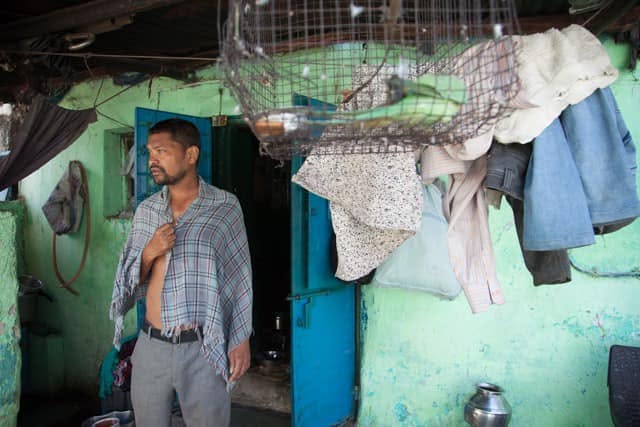
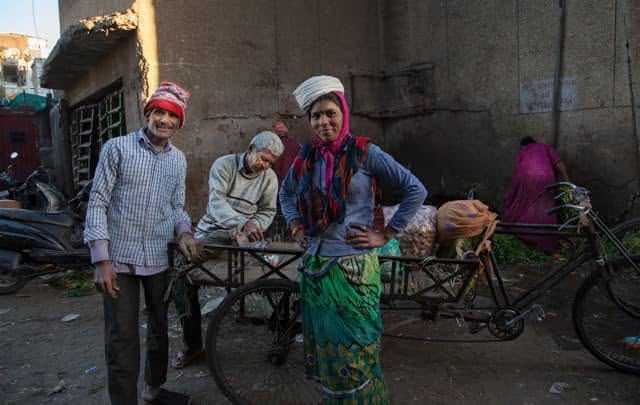
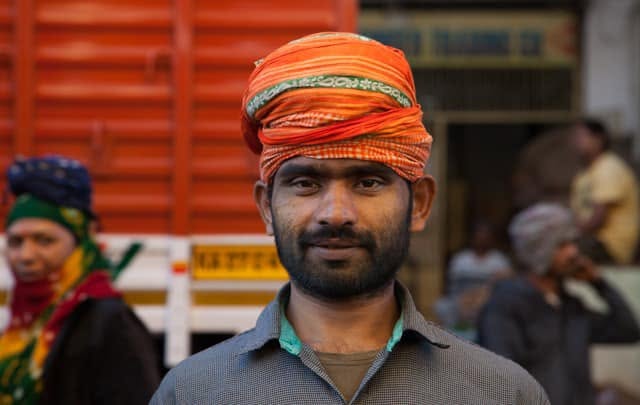
In the slum area of the old city, a Hindu neighbourhood turns into a Muslim one. The scent of incense from roadside temples fades away, replaced by the smell of goat droppings and feathers shed by chickens. People are everywhere: women peeling vegetables, men carrying bundles, children in school uniforms or ragged clothes.
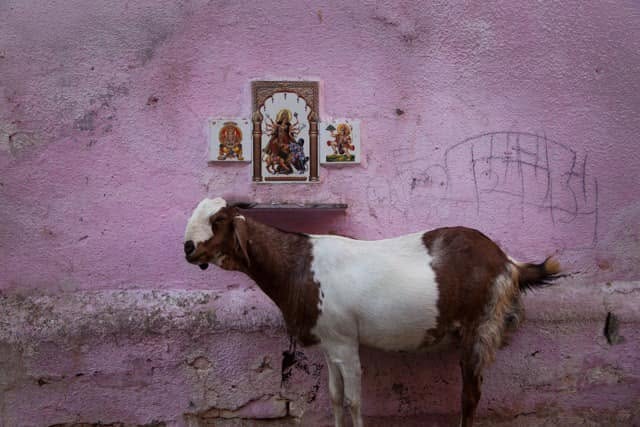
The buildings look ancient, and statues of Hindu gods still decorate their doorways. Low houses have been wedged into the spaces beside taller ones. Every square metre has been used, because there is little room and too many people. For all its chaos, the place looks exactly as it should. No one has planned this neighbourhood. It has grown out of life itself, out of everyday necessity. Cities that suit the human soul are rarely designed at a desk. Beauty grows from life.
Children swarm around me. They want to take selfies. I tuck a small boy under my arm and we look into the phone camera. Then comes a friend, another, a third. Soon one arm is no longer enough to fit everyone into the picture. Someone calls for their mother.
Almost every child in the slum has a smartphone. They know how to play games, watch videos and talk to artificial intelligence, even though many can barely read. They find their own tribe in distant ghettos and learn gang hand signs and the latest street fashions. They do not search Google for online schools or places where they could study languages, science, algebra or astronomy, even though all of it lies within their reach. A person’s territory is small, and few want to step outside their own circle.
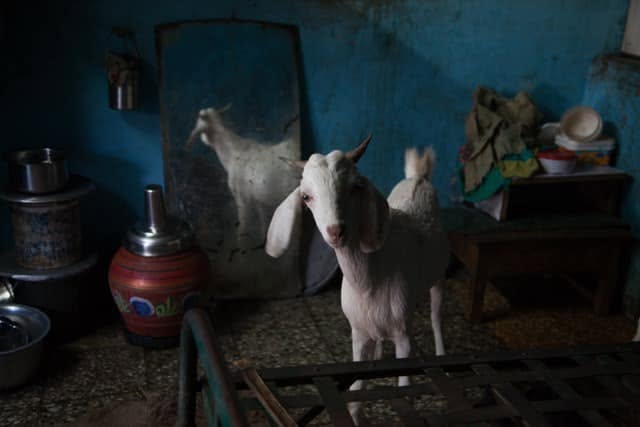
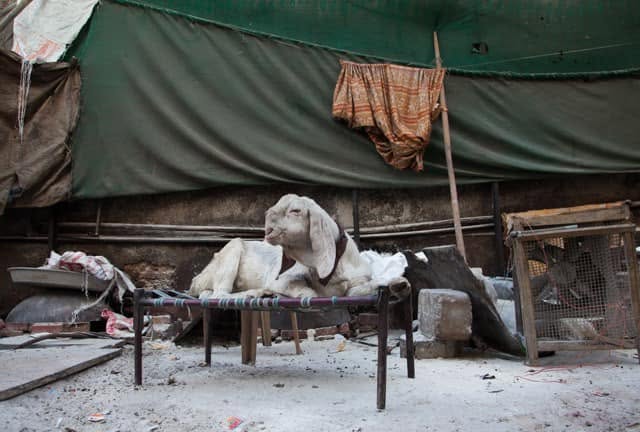
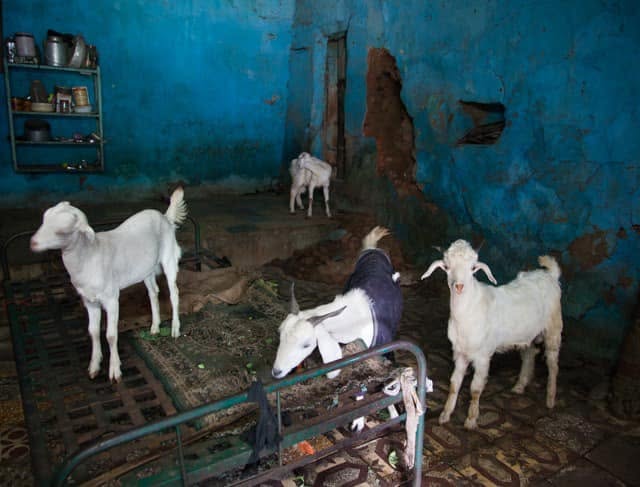
A small, wrinkled grandmother takes hold of my hand and leads me down a side alley. On the veranda of a shack sits a young woman with a dozen baby goats, some of them innocent white. She is warming milk and feeding it to them. For Muslims, domestic animals are important: capital that reproduces itself and daily food. A man from the neighbouring house gestures for me to take a photograph of him and his chicken.
The commotion around me grows louder. I know the best way to act: thank people warmly, look as many as possible straight in the eye, and wave to signal that I am leaving and there is no point in following me.
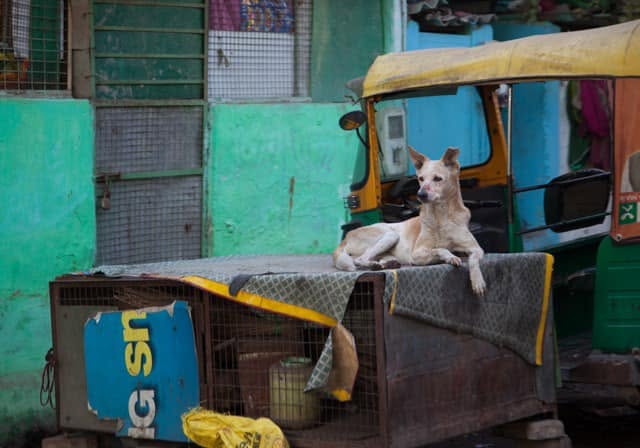
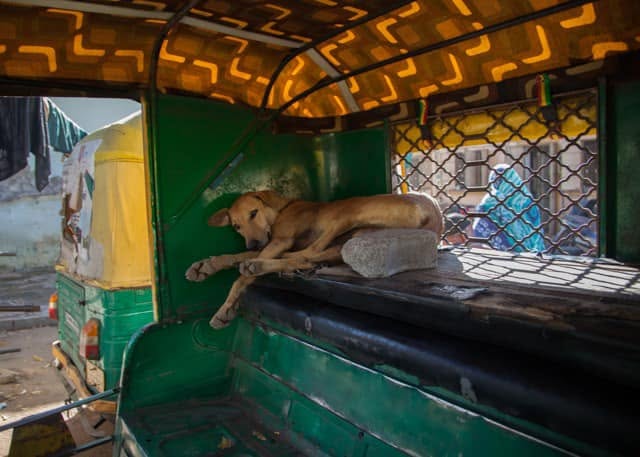
At the far end of the next street begins a food market. Fires burn along the roadside. Curry and lentil soup simmer in large pots. A little farther on, chapatis a metre in diameter are being baked. Dogs, chickens and goats linger on a stretch of road whitened by flour, waiting for their share of the meal. Full, content and completely unaware of their fate, they climb into carts and rickshaws for an afternoon nap.
Around the corner, the slaughter begins.
The goats do not look happy hanging from a beam with their legs tied and their throats cut. Fortunately, the knife looks sharp, and the killing is carried out according to sacred law.
From the next stall comes the beating of wings and the panicked clucking of chickens. A large cage is packed with the condemned. Inside, an axe comes down, a chicken’s head falls to the floor, blood runs over the butcher’s hands, yet the wings keep flapping like the feathers of a fallen angel on its final flight.
I turn away.
Once, curiosity would have compelled me to watch one killing after another. Now I do not want to witness slaughter, nor think about death.