9 February 2023
Ahmedabad
A Thousand Kilos of Flowers
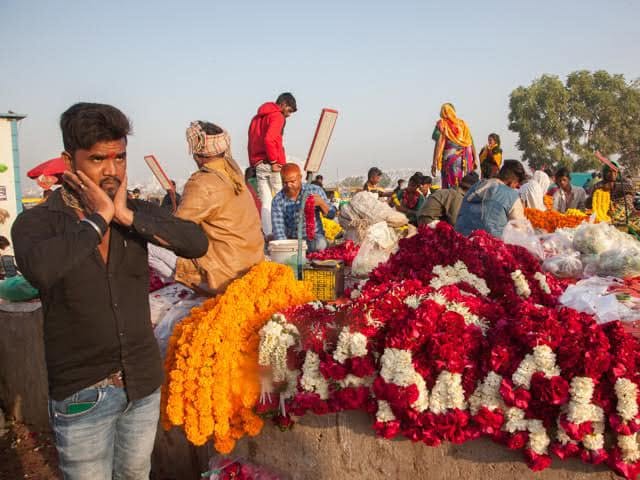
It is 5:30 in the morning when I cross the dammed sacred river. It is still dark, and there is not yet the slightest sign of dawn. Only a few stars shine through the blanket of pollution. On the far bank, in the old city, the lights of the flower market pulse in the darkness. A few trucks still stand on the bridge, their flower cargoes being unloaded. If I had wanted to see the whole show, I should have woken up at 3:30. Then I would have watched the trucks push their way onto the bridge, honking and shoving one another to secure the best spots closest to the market.
The flower trade is controlled by Muslims. It passes from one generation to the next. The skills are absorbed with a mother’s milk, and children grow into networks that already exist. Few people here spend much time wondering what they will become when they grow up. The paths of life are marked out long before birth.
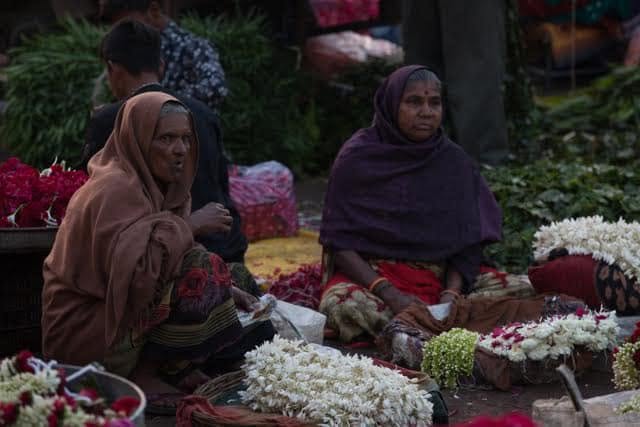
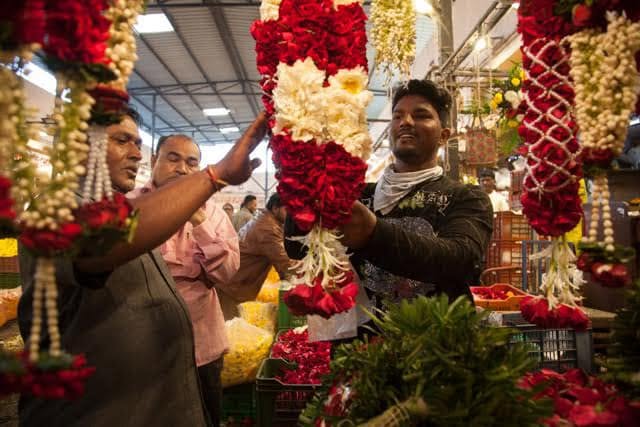
Inside the market hall, vendors sit among opened sacks of flowers and shout out prices. Only the blossoms are for sale. Nobody wants the stems. Roses have thorns, and people do not come here to buy pain but beauty. When a buyer appears, flowers are scooped from the sacks with both hands and stuffed into plastic bags, which are then weighed. Roses are exchanged for money, and someone earns enough for the day’s chapati.
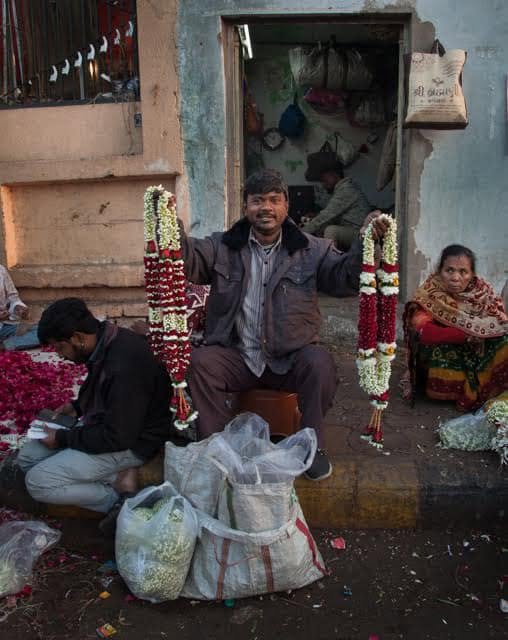
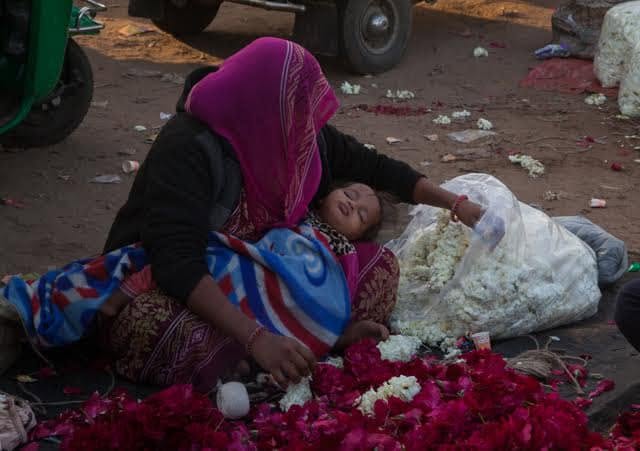
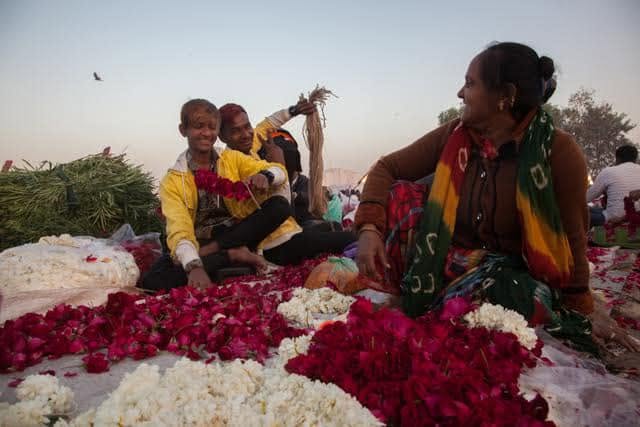
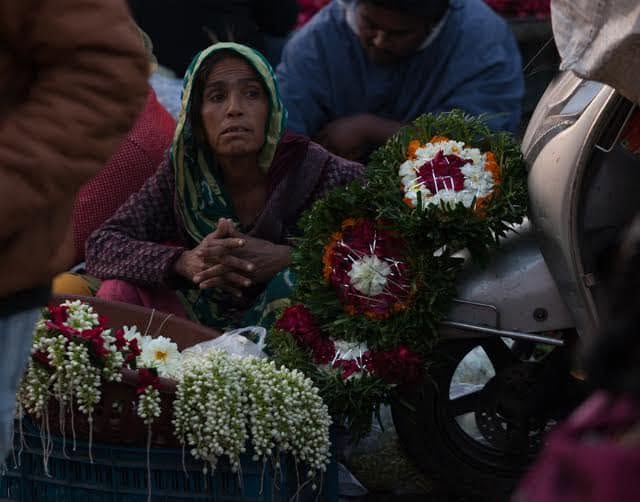
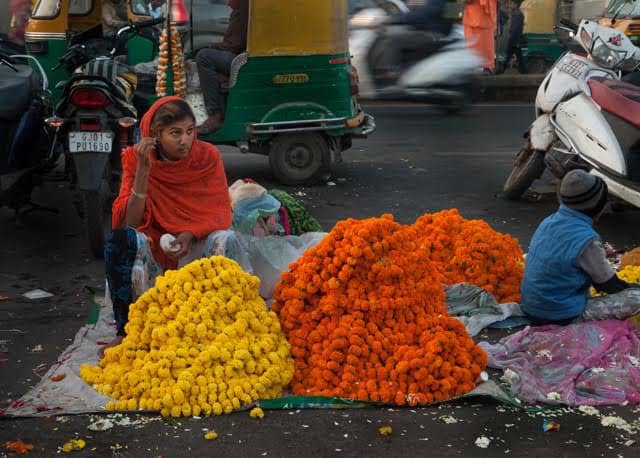
Outside the market hall, the garland makers have found their places. They sit in small circles surrounded by heaps of roses and marigolds. Every pair of hands twists string furiously, binding flowers into garlands. The marigolds become long yellow ropes, while roses and jasmine are woven into ribbons used to decorate ceremonial gates and wedding cars. The most beautiful garlands are made from fragrant jasmine and red roses. Some are adorned with plastic beads and shiny metal ornaments. They will be taken to temples, to gods unfamiliar to their makers.
The air smells of flower nectar, sweet and intoxicating like an exotic perfume. Mixed into it are the sweat drawn from the bodies of the porters, the exhaust fumes of passing vehicles, the urine left behind after a night’s sleep, and the rotten scent of yesterday’s roses. Nothing in this place is good or bad. It is a perfect mixture of everything.
The merchants are fiercely friendly. They aggressively want to be my friends and ask questions whose answers matter to no one:
— Which country?
— Finland.
— Good, America.
— No, Europe.
— Yes, Europe is good country.
I survive by smiling or by taking a few unnecessary photographs. I show them the pictures, and we compete in praising them. We smile, laugh, and share a small moment of life.
A little boy attaches himself to me. In his eyes there is a faint glow of curiosity, fragility, and incomprehension. Perhaps there was not enough protein in his food, or perhaps he simply was not present when life’s gifts were being handed out. We play for a while. I make funny faces, and he copies them.
Then I wander farther away, to where the rickshaws are parked and where the circles of people become thinner and farther apart. The atmosphere is different here. In place of excitement there is a confused despair and a wavering sense of menace. A young man approaches and invades my space. I can smell homemade liquor mixed with the spicy scent of paan. I find myself wondering whether this sticky state was preceded by even a brief moment of pleasant intoxication.
By eight o’clock I return to the market hall, where the show is coming to an end. The flowers that have fallen to the floor are swept away and become nothing more than rubbish.
An old man, who is said to have just turned sixty, wants to talk. He tells me about his life: love, his children, failures at work, and death, which took two sons and his wife. I do not ask what happened. I am not interested.
At last, he cautiously says that he would like to marry a foreigner. I decline the honour.
As I walk across the bridge away from the flower market, I think that this place is insane—just like the whole country, or perhaps the whole world.